Pomeranian Puppy Grooming: Building a Manageable Routine
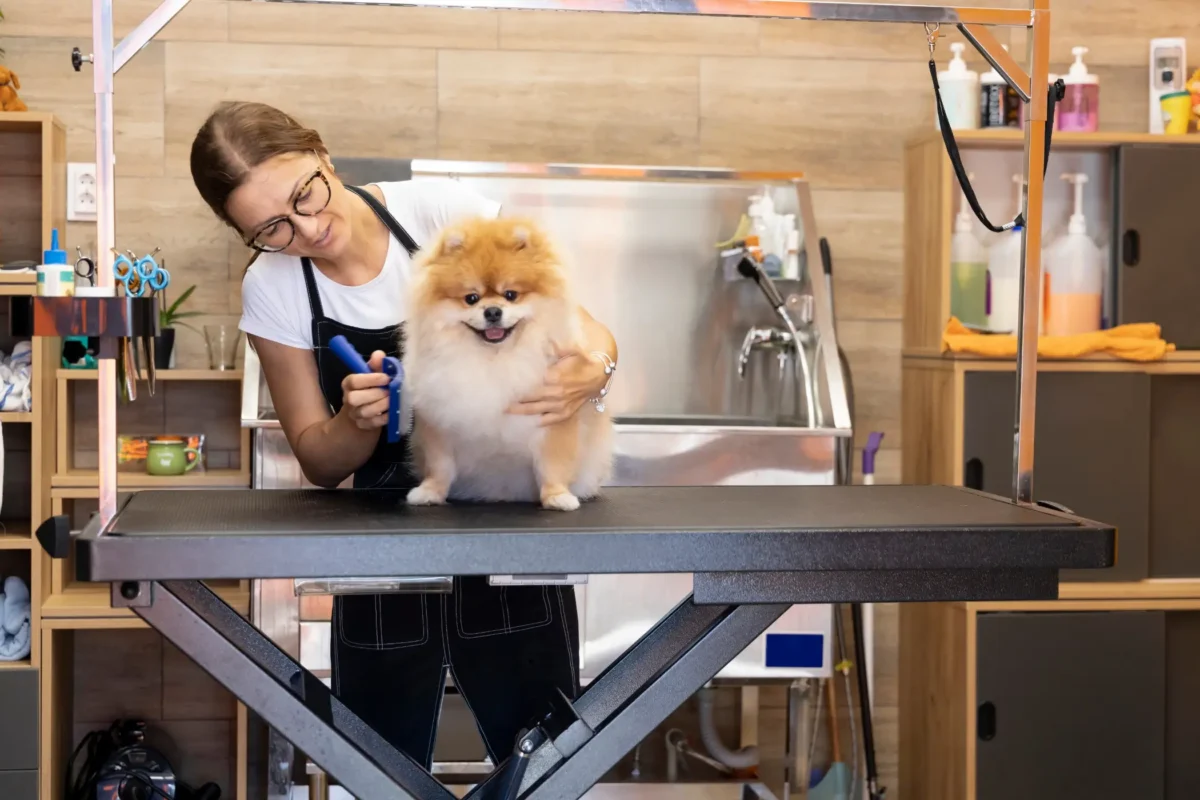
A Pomeranian puppy’s grooming routine should build comfort with handling while protecting the breed’s double coat. Short, calm sessions help a puppy learn to stand on a secure surface, accept touch around the feet and ears, and remain relaxed while you separate and brush small sections of coat.
Understand the coat before choosing tools
The American Kennel Club describes the Pomeranian as a double-coated breed with a dense undercoat and longer outer coat. Coat condition, age, and shedding stage affect the tools and technique that work best. Ask an experienced Pomeranian groomer to demonstrate brushing to the skin without scraping it or pulling through tangles.
A basic home kit may include a pin brush, an appropriately soft slicker brush, a metal comb, nail-care supplies, and a non-slip grooming surface. A professional can help you choose tool size and firmness for an individual puppy.
Teach the puppy how grooming feels
Begin with handling before attempting a full grooming session. Touch the shoulders, legs, feet, ears, chest, and tail area for a few seconds, then reward calm behavior. Introduce one tool at a time. Let the puppy investigate it before making a gentle pass through a small section of coat.
Keep the surface secure and support the puppy’s body. Stop if the puppy becomes frightened or struggles hard enough to risk a fall. Several short sessions can teach more than one long session that leaves the puppy tired or defensive.
Brush in manageable sections
Part the coat so you can work through a small area and check the skin beneath it. Pay attention to places where friction encourages tangles, including behind the ears, the chest, the legs, and around a harness. Use a comb to check your work rather than pulling through resistance.
A mat close to the skin can be painful and difficult to remove safely. Ask a professional groomer for help instead of cutting near skin you cannot see. The frequency of brushing should match the puppy’s coat and current shedding stage.
Include nails, teeth, and ears in the plan
Handle the paws often and introduce nail care in small steps. A veterinarian or groomer can demonstrate safe trimming and explain what to do if a nail bleeds. Ask your veterinarian to show you an appropriate dental-care routine and to assess the puppy’s mouth. Ear care should follow veterinary guidance, especially if you notice odor, discharge, redness, or discomfort.
Use bathing with a drying plan
Bathing frequency depends on the dog, coat, activity, and professional guidance. Use products intended for dogs and rinse the coat well. Dense coats need a careful drying process. Leaving moisture trapped near the skin can cause problems, while excessive heat can injure the puppy.
The AKC and breed-focused grooming guidance advise against shaving a Pomeranian’s double coat as routine maintenance. Discuss any medical clipping with the veterinarian treating the dog.
Know when to use a professional groomer
A professional can establish a coat-care schedule, demonstrate technique, handle difficult mats, and help the puppy learn a predictable grooming process. Ask about experience with Pomeranians, puppy introductions, sanitation, restraint, drying equipment, and how the groomer responds when a puppy becomes stressed.
Sources and further reading
- American Kennel Club: Pomeranian Breed Information
- American Kennel Club: Grooming a Double-Coated Dog
- American Kennel Club: Puppy Handling and Grooming
Ask about the current handling routine when you submit a Puppy Inquiry for an Old Pine puppy.